

Treatment and Conditions
-
It can be a lumbar nerve root under pressure, or it can come from the hip joint or a gluteal tendon and never involve the back at all. Reflexes, strength testing, nerve tension testing, and how the pain behaves with repeated movement separate them. One responds to direction-specific loading of the spine. The other does not improve until the hip is treated.
-
The median nerve can be compressed at the wrist, or the signal can be interrupted at a nerve root in the neck, or both. Which fingers are involved, what the neck does to the symptoms, and how grip strength tests tell them apart. Wrist treatment for a neck problem is a common reason hand symptoms persist.
-
Shoulders stop in the same place for different reasons. A tendon that hurts under load, a joint capsule that has lost rotation, the small joint on top of the shoulder, and a nerve root in the neck all limit reaching overhead and all feel like a shoulder problem to the person who has one. Resisted testing, passive motion, and a neck screen separate them.
-
A headache that starts at the base of the skull can come from the joints of the upper neck, from the tissue and muscle layered over them, or from a migraine that neck stiffness accompanies rather than causes. Pressure and movement at the top segments will reproduce the familiar headache when the neck is the source, and will do nothing when it is not. That one finding decides whether this is treated here or belongs with a physician.
-
The same ache can come from a disc, a facet joint, the sacroiliac joint, or a nerve root under pressure, and each one answers differently to sitting, standing, bending, and walking. Repeated movement testing, loading one structure at a time, and watching where the pain goes when it changes separate them. "Nonspecific low back pain" usually means the source was not located, not that there is nothing there to find.
-
Three different problems all get pointed to as the hip. The joint itself is usually felt in the groin, and sometimes only in the knee. A tendon on the outside is felt on the bony point and is worst lying on that side at night. Pain across the back of the hip is often referred from the low back or the sacroiliac joint and never involves the hip at all. Rotation testing, single-leg loading, and what the low back does to the symptoms separate them.
Same complaint, different causes.
Two patients describe pain the same way and need opposite treatment. The right diagnosis is key before any treatment is chosen.
How Problems Get Identified.

The examination has one job: bring on the pain the patient came in with, then change it.
Pain that can be produced deliberately and eased deliberately in the same visit has been located. Pain that cannot be reproduced has not been found yet, and treating it is guesswork.
Getting there starts with the history and then tests one structure at a time. How the joint moves on its own and how it moves when someone else moves it. What happens under resistance. What specific structures feel like under the hand. Testing reflexes, where the symptoms suggest a nerve is involved. Movements are repeated on purpose, because how a symptom behaves over ten repetitions usually says more than how it felt on the first one.
Findings drive imaging, not the other way around. An x-ray or MRI is requested when the examination calls for it or when it would change the plan.
What Treatment Involves

1. Restore motion at the joint
The examination finds the joint and the direction it has reduced motion. The adjustment targets that segment, in that direction, for a specific mechanical result. Hands-on joint work then opens that direction back out so the change holds instead of resetting overnight.

2. Free the tissue around it.
Muscle, tendon, and connective tissue all have to glide against each other for motion to be pain-free. Restriction shows up in specific places, and it gets freed there, not across whatever area is sore.

3. Get muscles working again
Pain and a lack of joint movement can both quiet a muscle down. Guided movement patterns, in the office and as a home program, get things switching “on” in the right order so the movement is restored.

4. Load it
Motion without strength is not a finished job. The last stage rebuilds the force, positions, speed, and endurance the patient's day actually asks for, whether that is a flight of stairs, a ladder, a garden bed, or a nine-hour shift.

5. Restore function
This was our goal. Stairs, a ladder, a garden bed in spring, a full shift that does not cost you the evening. Care is finished when the things you came in unable to do are things you are doing again.
What Care Looks Like.
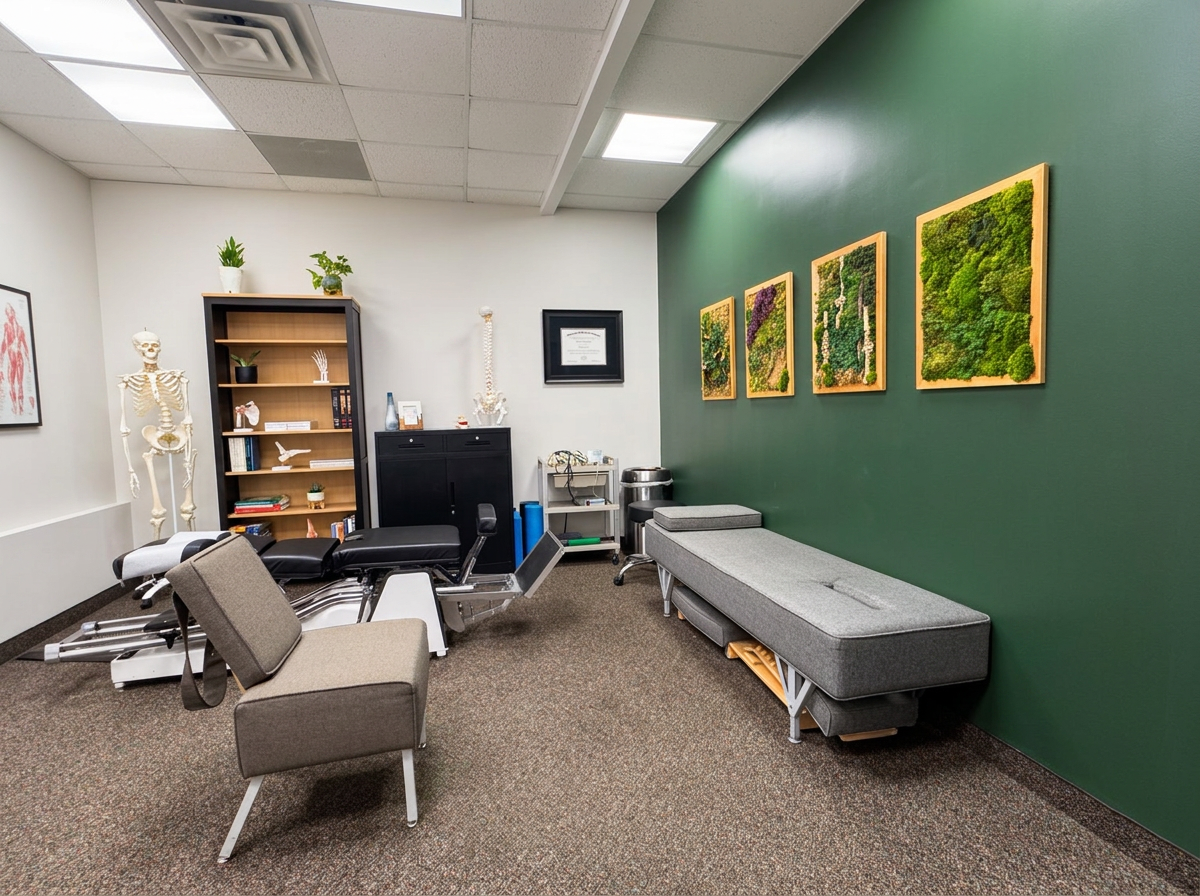
Treatment is hands-on and most of it is done lying on a table or sitting on a chair. Most of it does not hurt, though the structure being treated is usually tender by definition, which is part of how it was found.
The adjustment is specific, and it adapts.
Force, direction, and which areas get worked are set by what the examination found and by what the patient is comfortable with. For patients uneasy about the neck, there are low-force options that use very little rotation, and they are demonstrated before they are used. Nothing is done without explaining it first and without permission.
What happens after a visit sets the next one.
Some soreness afterward is normal, especially after joint work or the first round of new exercise. Soreness still there more than a day or two later means the amount was too much, and the next visit is scaled back. That is how the plan gets set. How often someone is seen, and how hard the work is, comes from what happened last time rather than a number chosen on day one. Visits are paid for one at a time.
The home program carries the work into the day.
What changes in the office has to show up in how a patient moves the rest of the week. The home program is short, specific to what the examination found, and it changes as things improve. Patients are taught what a movement is for and what to do when it stops working, rather than handed a sheet of exercises.
Progress is measured against the patient's own life.
Sleeping through the night. Getting through a shift. Lifting a grandchild. Walking to the end of the block and back. Those get written down at the first visit and rechecked against, because a pain score alone is a poor measure of whether someone got their life back.

Conditions Treated
Head, neck, and midback
-
Turning to check a blind spot, waking up stuck, an ache that builds through a day at a desk. The examination locates which levels have lost motion and which directions reproduce the pain, then treatment restores those specific directions rather than moving the whole neck and hoping. Strengthening for the deep neck muscles and the shoulder blades follows, because a neck that keeps stiffening usually is not being supported.
-
Headaches that start at the base of the skull and spread forward, often on one side, often with neck stiffness arriving first. The examination tests whether pressure and movement at the upper neck reproduce the patient's familiar headache, which is what separates this from other headache types. Treatment restores motion at those segments and addresses the muscle and tissue around them. Headaches that do not change with treatment to the neck are sent back for medical workup rather than treated indefinitely.
-
Pain, numbness, or weakness traveling into the shoulder, arm, or hand. The examination maps which nerve root is involved, tests whether taking the load off the neck relieves the arm, and checks strength and reflexes to set a baseline that gets rechecked. Treatment reduces the pressure on the root, restores the surrounding tissues ability to glide/move, and rebuilds the neck's tolerance for holding positions. Weakness that is getting worse is escalated rather than treated conservatively.
-
Stiffness and reduced rotation, often with an imaging report describing degeneration. The treatable finding is the motion lost at specific levels, not the appearance of the joints, and working on it is realistic at any age.
-
Often it is not coming from where it hurts. The lower neck refers into this area routinely, as do the joints where the ribs attach to the spine. The examination determines which, because treating the spot that is sore when the source is the neck is the reason this one recurs for years.
-
Symptoms that arrive a day or two later, with stiffness, headache, and difficulty turning. The first job is screening for anything that needs imaging or a higher level of care. After that, the priority is reintroducing motion early and in a graded way, because prolonged stiffness is what turns these into long problems. Treatment progresses from restoring motion to loading the neck and upper back back to normal tolerance.
-
Spinning when rolling over in bed or tipping the head back, or a constant unsteadiness that comes with neck pain and never quite spins. Those are different problems. Positional testing that provokes the episode and shows the eye movement that goes with it identifies the inner ear version, which is treated with specific repositioning maneuvers. Dizziness coming from the neck is arrived at by ruling the others out and by testing whether neck position and the upper cervical joints reproduce it, and it is treated as a neck problem. Dizziness with hearing change, new headache, double vision, or symptoms that do not fit a positional pattern is worked up medically first.
-
TMD symptoms (issues with your TMJ) often present as pain with chewing, clicking or catching on opening, a jaw that opens crooked or will not open far, often alongside headache and neck tightness. The examination separates the joint itself from the muscles that move it, measures how far and how straight the jaw opens, and checks the upper neck, which refers into this area and is commonly involved. Treatment addresses joint motion, works the muscles directly, and retrains how the jaw opens.
Low back and pelvis
-
An ache that builds through the day, stiffness getting out of a chair, a back that will not tolerate sitting or standing for long. The examination determines which structure is producing it: a disc, a facet joint, the sacroiliac joint, a muscle or tendon, or a nerve. Each one responds differently to bending, sitting, standing, and repeated movement, and each one is treated differently. "Nonspecific low back pain" usually means the source was not located, not that there is nothing there to find.
-
Leg pain is either a nerve under pressure, pain referred from a joint, or a problem in the hip that never involved the back. Reflex, strength, and sensory testing, nerve tension testing, and whether the pain retreats toward the spine with repeated movement determine which. Treatment takes the pressure off, restores the nerve's ability to move, then rebuilds tolerance for sitting, standing, and walking.
-
Most herniations improve without surgery. The examination looks for a direction of movement that pulls symptoms out of the leg and back toward the spine, and treatment is built around that direction, with the joints above and below restored so the injured level is not doing all the work. If symptoms will not move back toward the spine, or a neurological deficit is progressing, then we refer you out for a neurological evaluation.
-
The pattern is familiar: walking is limited by leg pain or heaviness, and leaning on a cart or sitting down relieves it within a few minutes. Treatment restores motion at the hips and midback so the low back is not forced into the position that closes the space down, adds the loading the spine tolerates, and builds walking tolerance in graded increments. Walking distance is the measure. When it does not move, injection or a surgical opinion is the right next step and is arranged as co-management rather than a handoff.
-
Pain low and to one side, often pointed to with one finger, worse standing on one leg, rolling over in bed, or getting out of a car. A cluster of tests separates it from lumbar and hip sources, which matters because all three present in the same few square inches. Treatment restores motion at the joint and then loads the hip and trunk muscles that control the pelvis when weight is on one leg.
-
Stiffness that is worst in the morning and after sitting, easing with movement, usually with a worn-looking imaging report behind it. Treatment targets the motion that has been lost at the affected segments and the strength that has been lost around them, both of which can respond very well to care regardless of what the imaging shows.
-
Pain in the back of the thigh or the inside of the groin that started with a sprint, a slip, or a change of direction, or built slowly with sitting and driving. The examination separates a muscle or tendon that hurts under its own contraction from leg pain referred by the low back or the hip, which is a distinction that gets missed in both directions. Treatment works the tissue directly, restores motion at the hip and pelvis, and rebuilds the muscle through the length and speed it failed at, since strains that were never loaded back to full are the ones that recur.
Shoulder, elbow, and hand
-
Pain reaching overhead, reaching behind, or lying on that side. Resisted testing identifies which tendon is loaded, and passive testing establishes whether the joint itself is still moving, which is the distinction that determines whether strengthening or flexibility will help it. Treatment restores the joint mechanics first, treats the tendon directly, then loads it through the range that failed.
-
Motion is lost in a recognizable pattern, rotation outward first, and it is lost whether the patient moves the arm or someone else does. This one has stages, and treatment that is appropriate in one stage is wrong in another, which is why it is misjudged so often. Treatment is graded joint work matched to the stage, with home motion work in between. Cases that stall are co-managed with a physician, since an injection at the right point can make the joint work possible.
-
Deep pain with rotation and a gradual loss of reach behind the back or overhead. Treatment works on the rotation the joint has available and builds the strength around it. If conservative care is not effective, you can be referred to an orthopedist for further evaluation.
-
Pain at the outside or inside of the elbow with gripping, lifting, or turning a key. Resisted testing identifies the specific tendon, and the neck and nerve get screened, because arm pain that will not settle sometimes is not an elbow problem at all. Treatment combines specific hands-on work at the tendon with graded loading of the wrist and forearm, and addresses grip and shoulder mechanics upstream.
-
Opening jars, turning keys, pinching, lifting a pan. The examination separates joint from tendon and identifies which specific structure is being loaded. Treatment restores motion at the small joints of the wrist and hand, works the tendon directly, and builds grip and pinch back up.
-
Numbness in the thumb, index, and middle fingers, worst at night, sometimes with dropped objects. The examination separates true compression at the wrist from a nerve root in the neck producing the same symptoms, and it is possible to have both. Treatment addresses the wrist, connective tissue mobility surrounding the nerve, and the positions and loads that keep provoking it. Numbness that never lets up, or visible wasting of the thumb muscles, is referred to a neurologist.
-
Pain right on top of the shoulder, pointed to with one finger, worst reaching across the body, lying on that side, or pressing overhead. It is a small joint and it is missed often, because the pain sits close enough to the rotator cuff that the whole shoulder gets treated instead. Loading the joint directly and comparing it against resisted testing of the cuff separates them. Treatment restores motion at the joint, works the tissue over it, and changes the positions that keep compressing it, usually reaching across the body and pressing overhead.
-
Aching, heaviness, or numbness in the arm and hand that is worse with the arms overhead, carrying a bag on that shoulder, or sleeping with the arm up. The signal can be interrupted at the neck, at the wrist, or between the collarbone and first rib, and this last one is commonly missed, so the examination works through all three rather than stopping at the first plausible answer. Treatment restores motion at the first rib, collarbone, and upper back, frees the tissue the nerve passes through, and retrains the shoulder blade and breathing pattern that keep closing the space. Arm swelling, color change, or coldness is a vascular presentation and is referred out for management.
Hip, knee, and ankle
-
Hip arthritis is felt in the groin, sometimes only in the knee, and shows up first as lost rotation rather than as pain. The examination separates it from pain referred from the low back and from tendon problems on the outside of the hip. Treatment works to restore rotation and extension at the joint, then rebuilds the strength that walking, stairs, and standing up from a chair demand. When function does not improve, or a replacement is already planned, care is coordinated with the surgeon before and after.
-
Pain on the outside of the hip, worst lying on that side at night, crossing the legs, or standing with the weight shifted onto it. Long called bursitis, it is usually a tendon under compression, and the positions that compress it have to change before loading it will help. Treatment removes those positions first, then loads the tendon progressively.
-
Stairs, kneeling, and the first few steps after sitting. The knee is often not the whole problem: a hip that has stopped rotating or an ankle that has stopped bending changes what the knee has to absorb with every step. Treatment aims at restoring full straightening, addresses the joint above and below, and builds quadriceps and hip strength.
-
A knee that catches, swells after activity, or hurts with twisting and squatting. The examination separates a knee that is mechanically blocked from a knee that is irritated, because those have different answers. Degenerative tears are common findings on imaging and frequently are not the reason the knee hurts. Those respond to restoring motion and loading the joint. When a knee locks or does not improve it is referred to an orthopedist for evaluation.
-
Pain and stiffness at the back of the heel or the cord above it, worst in the first steps of the morning and after activity. Which part of the tendon is involved changes the treatment, and a stiff ankle joint above it is a common reason the tendon keeps getting overloaded. Treatment restores ankle mechanics and puts the tendon on a graded loading program.
-
The first steps out of bed are the giveaway. The tissue on the bottom of the foot is usually not where the problem started: limited ankle bend, a stiff big toe, or a hip that changed how the foot strikes will keep reloading it. Treatment addresses those, works the tissue directly, and rebuilds the strength of the foot itself rather than relying on support alone.
-
A rolled ankle that swelled, then mostly settled, and now gives way, aches after a long day, or has never felt right again. The examination checks the ligaments, screens for the fractures that get missed at this joint, and looks at what motion the ankle lost, because a stiff ankle that never regained its full bend is the usual reason the same ankle keeps rolling. Treatment restores motion at the ankle and foot joints, works the tissue, and rebuilds balance and strength on that leg.
This list is not exhaustive. Other musculoskeletal complaints are evaluated and treated here, from athletes to seniors, including pregnancy-related pain. If you are not sure whether your problem belongs here, it can be evaluated.

About arthritis and degenerative change
Imaging reports use words that sound like a verdict. Degeneration. Bone on bone. Wear and tear. Patients arrive having been told there is nothing to do but wait for a replacement, and they arrive discouraged.
Degenerative findings on imaging are extremely common in people who have no pain at all. In a review of imaging in people without symptoms, disc degeneration was present in about a third of twenty-year-olds and in nearly everyone by age eighty. Which is why it cannot on its own explain why one person hurts and another does not.
That matters practically, not just philosophically. Two people with the same report can have very different function, and the difference between them is usually motion and strength. Those are treatable. A joint that has lost rotation can gain rotation back. Muscle that has been avoided for two years can be rebuilt. Neither one changes the imaging, and neither one has to.
What treatment offers here is not a reversal of arthritis and is not a promise about what an x-ray will show next time. It is restoring the motion the joint still has available, taking the load off what is being provoked, and building the strength that makes an ordinary day tolerable again. For many patients that is the difference between a stairway and an elevator. For some, it also clarifies the decision about surgery, because a joint that responds to motion and strength work is a different situation than one that does not.
Age is not a reason to be told to live with it.
If it is not responding, the diagnosis gets revisited.
Progress is rechecked against the findings from the first visit. When gains are not holding or improvement stalls, the working diagnosis is the first thing questioned, not the last. Sometimes that means testing something different. Sometimes it means this is not a musculoskeletal problem, and it goes to the right person.