


New Patients Welcome; no referral needed.
Online scheduling open to new and existing patients! Or, contact us to schedule another way.
Your first visit here.
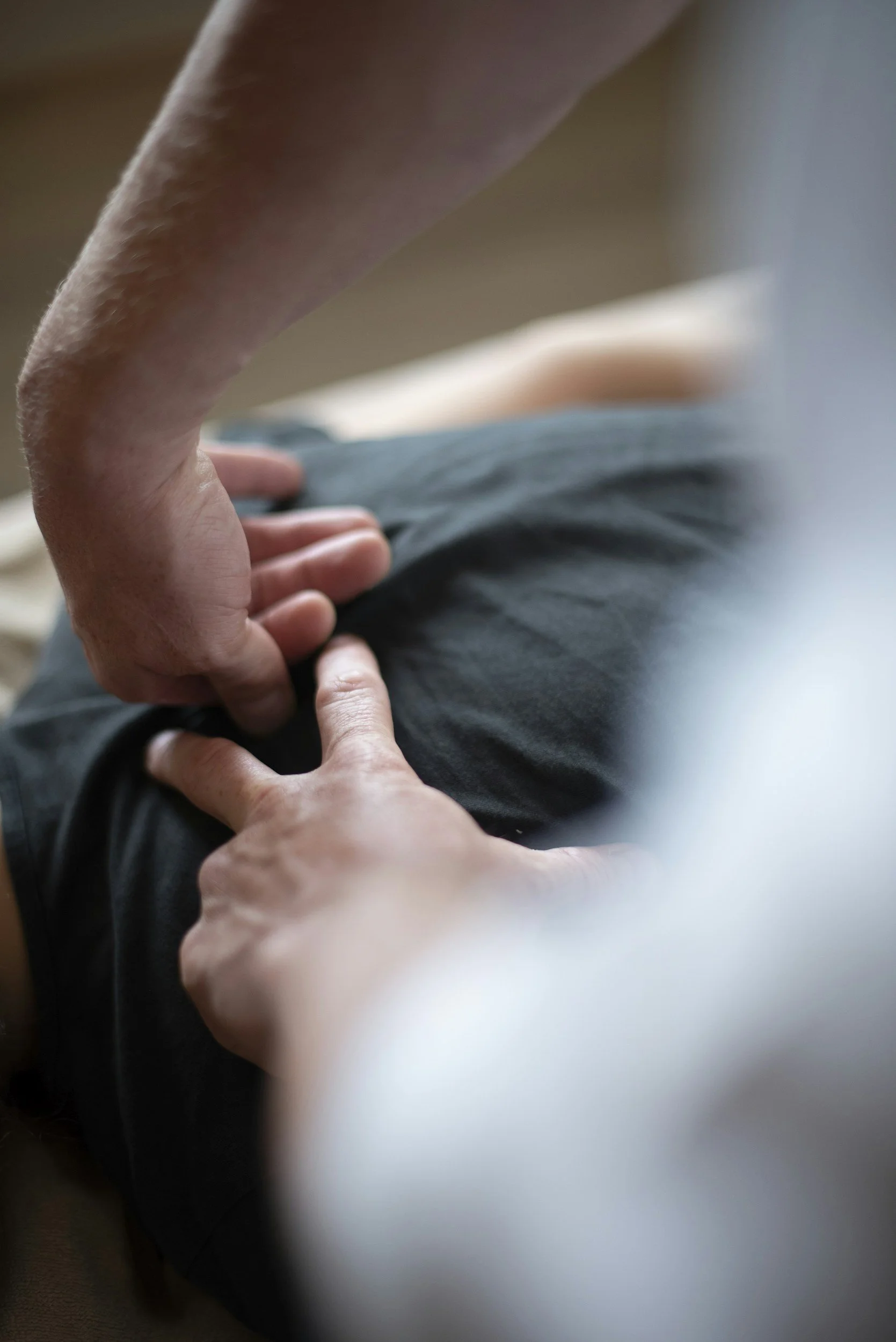
The first visit answers a specific question: where are the symptoms coming from, and what is driving them? A painful knee is not always a knee problem. The hip can refer pain to the knee, and treating the knee alone would miss the source.
The visit includes a history, an examination of the painful area and the relevant joints above and below it, and a clear review of the findings. You will understand the working diagnosis, what is contributing to it, and what treatment needs to address. When appropriate, treatment begins that day.
Treatment is not one thing. Adjusting restores motion to a restricted joint, soft-tissue work addresses the surrounding tissues, and progressive exercise helps the improvement last. Care is not limited to the spine. Shoulders, hips, knees, ankles, feet, hands, and the jaw are treated directly. If an old ankle injury changed how you walk and contributed to a hip problem, both are addressed.
When the findings point to care outside this clinic, the appropriate referral is made and the relevant records are sent with it.
Before you arrive

Intake forms. Complete the patient profile and intake forms through the patient portal before arrival. It preserves the appointment time for the examination itself.
What to wear. Clothing that allows movement. Athletic wear is helpful for hip, knee, and shoulder evaluations.
What to bring. Imaging reports and relevant recent records, a current medication list, and an insurance card if using insurance.
Getting here. The clinic entrance is at the back of the building. Parking, the entrance, and step-free access are described on the Contact page. Patients who need step-free entry are welcome to call or text ahead.
Cost
Insurance
The clinic currently accepts:
Aetna
Cigna
First Health
HealthPartners
Kaiser Permanente
Medica
Medicare
Minnesota Medicaid
The Alliance
The Empire Plan
UCare
UnitedHealthcare/UMR
VA Community Care (through Optum)
Chiropractic coverage varies by plan, even with accepted insurers, and some plans may exclude benefits. Benefit quotes are estimates only and are not a guarantee of coverage or payment. Please confirm your benefits with your insurance company.
Self-pay
Patients who elect self-pay, and patients whose plan is not listed, are seen at self-pay rates.
A typical follow-up visit is $87 and includes an adjustment along with hands-on treatment such as soft tissue work or rehabilitation.
A typical first visit is $167, which covers the examination and treatment the same day.
Visits cost less when they call for less and more when they call for more, and the cost is discussed before services are provided.
Payment is due at the time of service, credit cards are accepted, and visits are HSA and FSA eligible.
Care is provided one visit at a time; the clinic does not sell prepaid treatment packages.
Your Questions, Answered
-
Adjusting is what a chiropractor does, and restoring motion to a restricted joint is the center of the treatment. It is also never mandatory. Every adjustment is optional, what is planned is explained before it happens, and patients who would rather not be adjusted are treated with joint mobilization, soft tissue work, and rehabilitation instead. How an adjustment is delivered is flexible as well: force, speed, and position are chosen to fit the patient, the joint, and the condition, and low-force techniques are available on request. The adjustment is also not the whole visit. Soft tissue treatment and loaded exercise are what make the treatment last.
-
Yes. All adjustments are optional. For patients uneasy about neck manipulation, single-segment techniques with minimal rotation can also be used, demonstrated first so nothing is a surprise, and the choice remains the patient's at every visit. Declining is not a problem and does not change the rest of the treatment.
-
Restoring motion to a joint that has been restricted for a long time can be uncomfortable in the moment, and mild soreness for a day or two after early visits is common; ice and ordinary movement manage it. Treatment is dosed to what the tissue can recover from between visits and adjusted based on response, and visits typically become more comfortable as motion returns.
-
Not here. The spine is a large part of the work, but shoulders, hips, knees, ankles, feet, elbows, hands, and the jaw are examined and treated directly, and extremity problems are frequently what patients are seen for. Joints away from the symptom are examined as well, because a restriction in one region routinely produces symptoms in another.
-
Not routinely. Imaging is ordered or requested when the history and examination indicate it, when a finding would change the treatment, or when a condition is not responding as expected. Existing imaging reports are worth bringing; imaging that does not change what happens next is not worth the exposure or the cost.
-
Yes, regularly.
I refer to and co-manage with physical therapists, primary care and orthopedics, pain management, massage therapists, and trainers, depending on what a case needs. Sometimes that means sending you out. More often it means working alongside someone you already see.
If you're already under care somewhere, tell me. I’d love to coordinate with your healthcare team.
-
Degenerative findings are common on imaging and correspond poorly with symptoms; the same findings appear in large numbers of people who have no pain at all. What the examination determines is whether the pain has mechanical drivers that respond to treatment. Where it does, treatment is directed at those drivers rather than at the imaging report. Where it does not, that is said plainly at the review of findings.
-
Patients are seen before surgery, after surgery, and while deciding. Care in that setting is co-management rather than an argument against the procedure: the surgical plan stands, and treatment here addresses the mechanical contributors that remain modifiable. Post-surgical care begins when the operating provider has cleared it, and findings are reported back.
-
It depends on the diagnosis, how irritable the condition is, and how it responds to treatment, so the estimate is given after the initial examination rather than in advance. Typically, visits are more frequent early, decrease as function returns, and the active episode of care concludes with a home program the patient runs independently.
-
No. Our goal is to empower you to manage your pain at-home. Care is provided one visit at a time, and patients are always free to decide whether to continue. The active episode ends when the patient can manage the condition independently. Patients afterwards can elect for periodic re-examination at intervals of several months for patients who self-manage well or shorter intervals where the condition, degenerative change, or occupational demands warrant it. The model parallels preventive dentistry; the patient does the daily home work, and periodic examination confirms nothing is developing unnoticed. The interval is a clinical decision made with the patient, never a condition of care.